Daikon Cakes

Daikon Cakes

This sounds unusual, granted. A daikon is a Japanese radish, basically a white radish that is normally larger than carrots. The flavor raw is that of a red radish, when cooked it is of a mild carrot. I certainly look forward to making these! Consider this an Asian twist on potato cakes. Link to the shortcut is listed in the Recipe Notes section.
Prep Time 15 minutes
Cook Time 6 minutes
Total Time 1 hour 21 minutes
Course Side
Cuisine American
Servings 4 servings

Ingredients
  

  • 1 1/2 cups daikon, grated
  • 2 teaspoons salt
  • 1 clove garlic, smashed and minced
  • 1/2 red onion, diced
  • 1-2 egg, beaten
  • 1/2 cup Italian bread crumbs, OR make from a shortcut
  • 1/2 teaspoon black pepper
  • 1/2 teaspoon paprika
  • 1 teaspoon Sriracha Chili Garlic sauce
  • cooking oil, as needed

Instructions
 

  • Place the grated daikon in a large mixing bowl and sprinkle with the salt and mix. Cover and place in the fridge for 30 minutes.
  • When the daikon is ready, pour the daikon into a colander and rinse the daikon well, then gently squeeze out any remaining water. Wipe out the mixing bowl and return the daikon to the bowl.
  • To the daikon, add the garlic, onion, 1 egg, bread crumbs, pepper, paprika, and the Sriracha. Mix together with your hands. If the mixture does not stick together well, mix in another egg.
  • Shape into 8 small patties and place them on a plate. Place the plate in the fridge for 30 minutes to firm them up.
  • In a large non stick pan, add about 1/4 inch of cooking oil and heat on medium high temperature. When the oil is hot, add some patties, work in batches if needed.
  • Fry the patties for about 3 minutes on each side or until nicely browned. Drain on paper towels.
  • Serve as a side dish with dipping sauces of your choice, such as ketchup, sour cream, or Sriracha. Enjoy.

Notes

Low cost.
Shortcut: Italian Breadcrumbs
Adapted from an internet recipe.
Brian’s Restaurant Style Onion Rings

Brian's Restaurant Style Onion Rings

This is from a good friend who modified an internet recipe he found, his words, "They were crispy, not soggy, had good flavor and the family enjoyed them." This sounds like a winner. On my to cook list.
Prep Time 15 minutes
Cook Time 3 minutes
Total Time 18 minutes
Course Appetizer, Side
Cuisine American
Servings 0

Ingredients
  

  • 2-3 large sweet onions
  • cooking oil, as needed

For Dredging

  • 1 cup all purpose flour
  • 1 teaspoon kosher salt

For Batter

  • 1 cup all purpose flour
  • 1 teaspoon kosher salt
  • 1 tablespoon baking powder
  • 1 teaspoon white pepper powder
  • 1 cup beer
  • 2 tablespoons cold water

Instructions
 

  • Slice onions into 1/2 inch thick slices, break rings apart and sort by size, reserve the end pieces and small pieces for other use.
  • In a zip lock bag, add the Dredging ingredients.
  • In a bowl, add the dry Batter ingredients and mix together. Then mix in the beer and water.
  • Using a stove top pot, add enough oil to have at least 3 inch depth in pot. A deep fryer can also be used. Heat oil to 190 C (375 F) using a probe thermometer. If you have a deep fryer, certainly use that.
  • While the oil is heating, place onion rings in the bag with the flour and shake, the cheater way of dredging, work in batches if needed to coat all the rings in flour. The dredging allows the batter to adhere to rings.
  • When the oil is at the correct temperature, one at a time, add a ring to the batter and coat well and place in the hot oil. Continue with rings in the batter and into the oil, but single layer only and do not overcrowd or let the rings touch while cooking.
  • Using a chopstick or skewer, turn each ring over after frying 2 minutes or until golden brown, then cook another 1 minute or until golden brown, remove to a wire rack placed over a baking sheet to drain and cool.
  • Continue until all the onion rings are cooked. Let rings cool 1 minute before serving.
  • Serve with your favorite dipping sauce.

Notes

Low cost.
Recipe provide by good friend, Brian Colligan, Pleasures & Pastimes (which is a great resource for gardening seeds and other items).
Thailand.
Seasoned Black-eyed Peas (Pressure Cooker)

Seasoned Black-eyed Peas (Pressure Cooker)

Adapted from an internet recipe.
I made these on 23 Sep 2018 and I must say, these are good beans! I used my 9 liter (9½ quart) stove top pressure cooker for these. Follow all safety precautions for your model of pressure cooker.
Prep Time 15 minutes
Cook Time 5 minutes
Total Time 20 minutes
Course Side
Cuisine American
Servings 6 servings

Equipment

  • Pressure Cooker

Ingredients
  

  • 500 grams dry black-eyed peas, soaked 6-8 hours, (1 lb)
  • 250 grams bacon, chopped, (8 oz)
  • 2 tablespoons olive oil
  • 2 tablespoons butter
  • 1 onion, diced
  • 1 green bell pepper, diced
  • 1 red bell peppper, diced
  • 8 cups chicken stock, fresh or from powder
  • 2 tablespoons apple cider vinegar
  • 1 tablespoon Worcerstershire sauce
  • 1 teaspoon ground cumin
  • ½ teaspoon chili powder
  • ½ teaspoon celery seed
  • 2 teaspoons dried oregano
  • ¼ teaspoon cayenne pepper
  • salt and pepper, to taste

For Plain Black-eyed Peas

  • 500 grams dry black-eyed peas, soaked 6-8 hours, (1 lb)
  • 2 tablespoons olive oil, very important
  • 8 cups water
  • salt and pepper, to taste

Instructions
 

  • Rinse the beans and place in a large container, cover with 1-2 inches of water. Leave on the counter to soak for 6 to 8 hours. If soaking overnight, place in the fridge to prevent the beans from fermenting.
  • When you are ready to start cooking, drain and rinse the soaked beans. Set the beans aside.
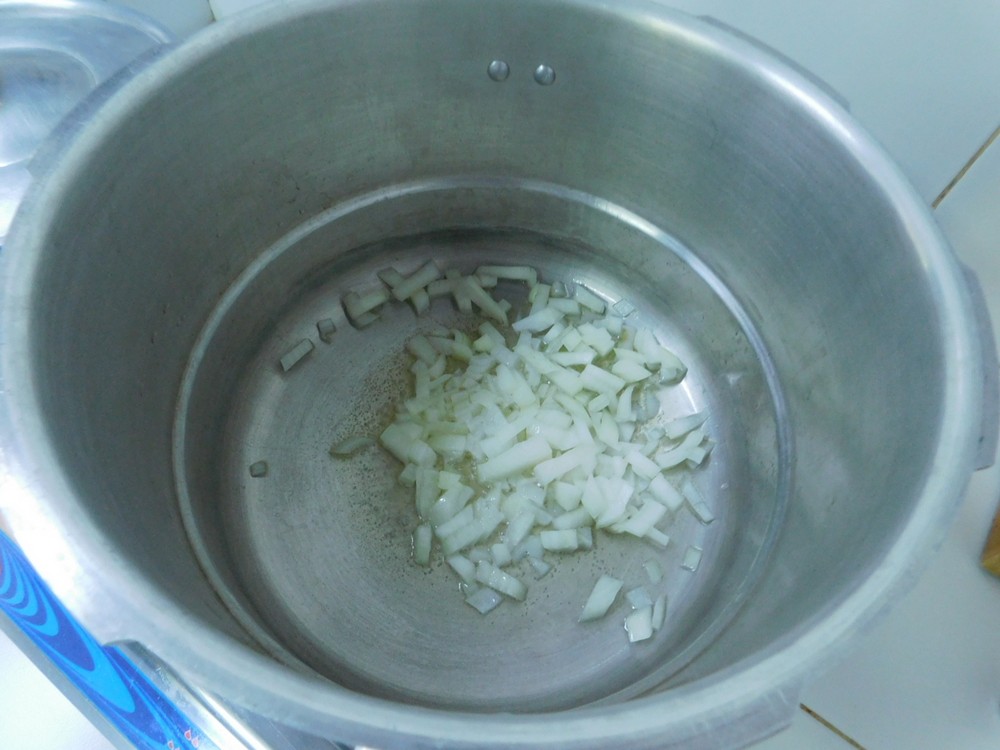
  • Heat the oil and butter in your pressure cooker with the lid off, when hot, add the onion and saute for a few minutes.
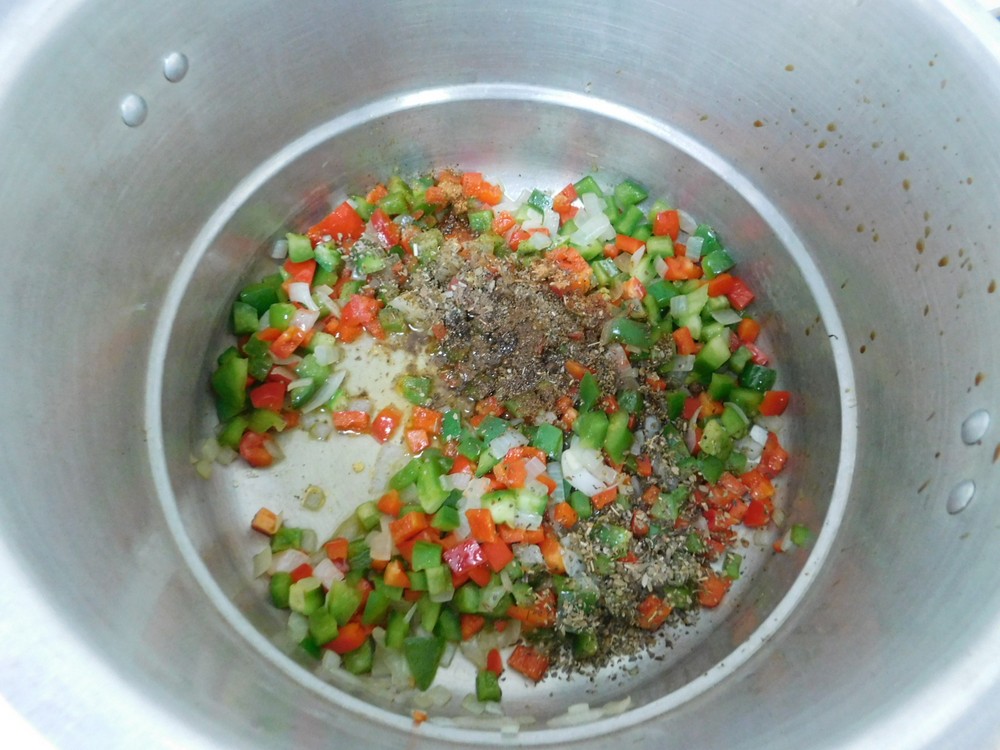
  • Add the garlic and bell peppers, saute to just soften them, a minute is fine.
  • Add the apple cider vinegar, Worcestershire sauce, cumin, chili powder, oregano, stir together.
  • Add the chopped bacon and stir in.
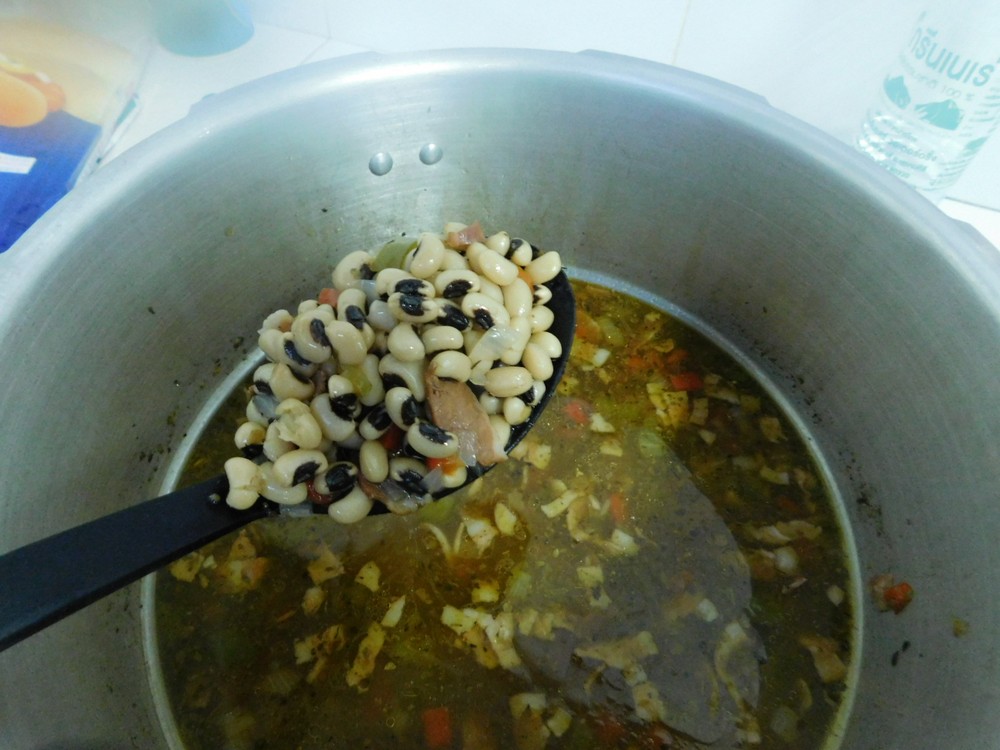
  • Add the chicken stock and beans, and stir together.
  • Place the lid on the pressure cooker, add the weight (jiggler). Turn the heat up to high. When the weight starts to move and release pressure, turn the heat to low or medium in order to maintain the jiggler moving and venting pressure (indicating you have full pressure.) Set your timer for 5 minutes.
  • When 5 minutes have passed, turn off the heat, and carefully move the pressure cooker to an unused burner and allow a natural release of pressure, basically, just let the pot sit there until you have indication of zero pressure, 15-20 minutes.
  • When the indication is zero pressure, pull off the weight (jiggler), then remove the lid. Taste the beans and adjust seasoning with salt and pepper as desired.
  • Serve as a side dish.

Notes

Low cost.
Used in Recipes Listed on this Site:
Three Bean Salad

Three Bean Salad

This sounds really delicious and can be made any number of ways depending on the types of beans you use each type. I will make this with dry or fresh beans that I have cooked, feel to use canned beans if you like. If you would like to cook the beans from dry or fresh, those shortcuts are in the Recipe Notes section.
Prep Time 10 minutes
Total Time 4 hours 10 minutes
Course Side
Cuisine American
Servings 6 servings

Ingredients
  

  • 3/4 cup green beans, drained, or a 8 oz can drained, rinsed
  • 3/4 cup red Kidney beans, drained, or a 8 oz can drained, rinsed
  • 3/4 cup chickpeas, drained, or a 8 oz can drained, rinsed

For the Dressing

  • 1 tablespoon Dijon mustard, optional
  • 2 tablespoons red wine vinegar
  • 1 tablespoon extra virgin olive oil
  • 1 tablespoon white onion, grated
  • 1 clove garlic, grated
  • 1/8 teaspoon salt
  • 1/4 teaspoon black pepper

Instructions
 

  • In a large mixing, add all the Dressing ingredients and whisk together.
  • Add the beans to the mixing bowl and mix with the dressing to coat all the beans.
  • Cover the salad and place in the fridge for at least 4 hours or up to 24 hours.
  • Before serving, leave the salad out at room temp for 20 minutes then mix the beans again, serve as a side dish.

Notes

Simple Frog Legs II

Simple Frog Legs II

Rrayada Thayer, Thailand.
This is my wife's way to cook frog legs, very simple method. The frogs we get are locally harvested here in the village, they are not big but they are delicious. We get whole, cleaned, skinned frogs, I use the legs, the rest of the frog goes to the family and they use those to make a spicy Thai dish. This is a low ingredient recipe that makes a great meal. This is a make as much as you want recipe.
Course Main Dish
Cuisine American
Servings 0

Ingredients
  

  • fresh frog legs
  • chicken stock powder
  • black pepper
  • all purpose flour
  • cooking oil

Instructions
 

  • Rinse the legs and separate them, cut off the feet, and place them in a mixing bowl. We received 15 frogs, so we had 30 legs.
  • Add chicken stock powder, about 1½ teaspoons is perfect, then sprinkle on some black pepper as desired.
  • Stir the legs to cover them with the stock powder and pepper. Place in the fridge for 20-30 minutes.
  • Add some flour to a zip lock bag, ½ cup or so, add the legs, close and shake to coat them with flour.
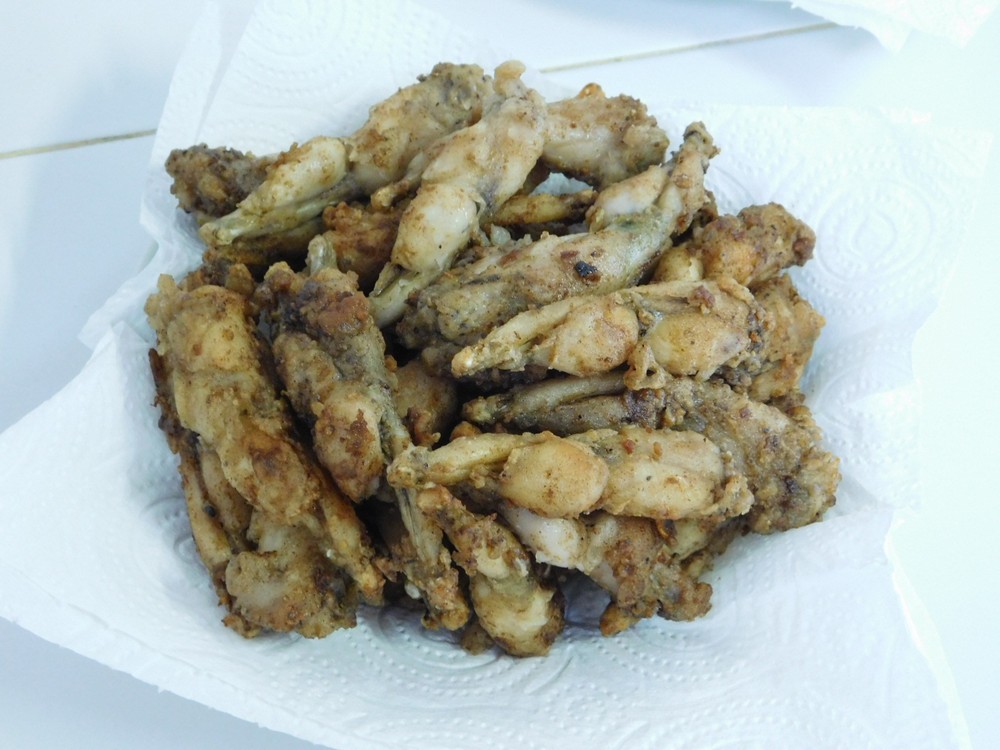
  • Heat some oil in a non stick pan, when hot, add some legs in a single layer, and fry until golden brown, turning them as needed. Remove to paper towels to drain. Repeat until all the legs are cooked.
  • Serve with sides of your choice. Enjoy.
Notes

I paid 300 Baht for the 15 frogs, and with the legs we cooked and the rest of the frogs cooked by the rest of the family, this provided about 10 servings. Plus I have some legs left over for dinner another day. This works out to about 90 cents per serving overall.
Sauerkraut

Sauerkraut

Brian Colligan, Thailand.
This is a homemade recipe for sauerkraut provided by a good friend in Thailand that likes to make items from scratch. Very important to weigh/measure the main items used, the cabbage and salt. The use of a digital scale is important. This is a lacto-fermented item, meaning this ferments on your counter top. I look forward to making this!
This recipe requires exact measurements for the cabbage and salt, you need to follow this. The kilo to lb measurements are accurate for this.
If you start with 3 heads of cabbage, you can make this in a ½ gallon mason jar, this recipe is based on 3 heads of cabbage, cored and sliced, then weigh it and adjust the salt and seasonings based on that. If you need help with how to figure out the ratio of cabbage and salt accurately, please let me know and I will certainly help you.
Prep Time 1 hour 30 minutes
Passive Time 7 days
Total Time 7 days 1 hour 30 minutes
Course Main Dish
Cuisine German
Servings 0

Equipment

  • Mason Jar (½ gallon)

Ingredients
  

Basic Ingredients

  • 1 kilo cabage, start with 3 heads, (2.20 lb)
  • 20 grams salt, (4 teaspoons)

Additional, per 1 kilo (2.20 lb) of Cabbage

  • 1 teaspoon caraway seeds
  • 1 teaspoon mustard seeds
  • 2 cloves garlic, smashed and finely minced
  • ½ gallon mason jar, sterilized

Instructions
 

  • Cut each head of cabbage in half and then cut the core out. Then cut the two pieces into smaller sections to ease the slicing.
  • Thinly slice the cabbage to about ⅛ inch thick, the use of a mandolin would be perfect for uniform slices.
  • Place the cabbage in a large mixing bowl and add ¼ of the salt needed. Use your hands to mix the salt into the cabbage. Then add a ¼ more of the salt and mix in, repeat this 2 more times until all of the salt is mixed in. Set the bowl aside for 30 minutes.
  • After 30 minute, the cabbage will have wilted and reduced in volume and liquid accumulated in the bowl, perfectly normal.
  • Now sprinkle in the caraway seeds, mustard seeds, and garlic. Use your hands and mix together well. Once again, set aside for 30 minutes.
  • Now transfer the cabbage and liquid into the jar and allow at least 1 inch of space at the top of the jar. Making sure the cabbage is below the level of the liquid.
  • Cover the jar with cheesecloth and secure with a rubber band or string. Write down the date you do this. Leave the jar on your counter top, (away from any cats, cats like to push things off counters).
  • Check the jar each day to make sure the cabbage is covered with the liquid. If it is not, remove the cheesecloth and tamp down the cabbage. If additional brine is needed, mix 1 cup of water with 1 teaspoon of salt and add that as needed.
  • Check the kraut each day for 7 days, adjusting as needed.
  • On the 7th day, sample the kraut, you should have good kraut now, use in other recipes as directed. If the taste is good, you can ferment longer for a stronger flavor.
  • You should now have ½ gallon of kraut.

Notes

Low cost.
Preparing Straw Mushrooms

Preparing Straw Mushrooms

Straw mushrooms, according to Wikipedia, are the 3rd most consumed mushrooms in the world, rightfully so as it is an Asian mushroom. Is the US, Canada, and Europe, most straw mushrooms will be canned and there is some specialty farms that grow these as well. These mushrooms are normally sold fresh and what is termed, closed, meaning the cap has not emerged yet, so they look like just round or oblong balls. When the cap has emerged then they are termed as opened. I received 1 1/2 kilos (3 lbs) of these mushrooms from an inlaw, however, nearly all were the opened type, so this was a first for me to prepare these. But with the closed type, there is a proper way to prepare those as well. Opened do not have much market value, the closed are prized for stir frys and soups, however, neither type has long shelf life once harvested so markets will run out of these as well as restaurants. This mushroom also costs more than other mushrooms due to the short shelf life and excellent flavor.
Cuisine Asian
Servings 0

Ingredients
  

  • fresh Straw mushrooms, opened and or closed types

Instructions
 

Cleaning

  • Normally when you buy these from a market the mushrooms are trimmed and free of any dirt or dark area where the ball of the mushroom came in contact with the straw (yes, they grow on a straw compost, hence the name). If you buy these direct from the grower, then just trim of any dark areas with a knife. Once trimmed, for the closed type, rinse under running water and shake off excess, for the opened type, very briefly rinse under running water and shake of excess water.

Opened Type

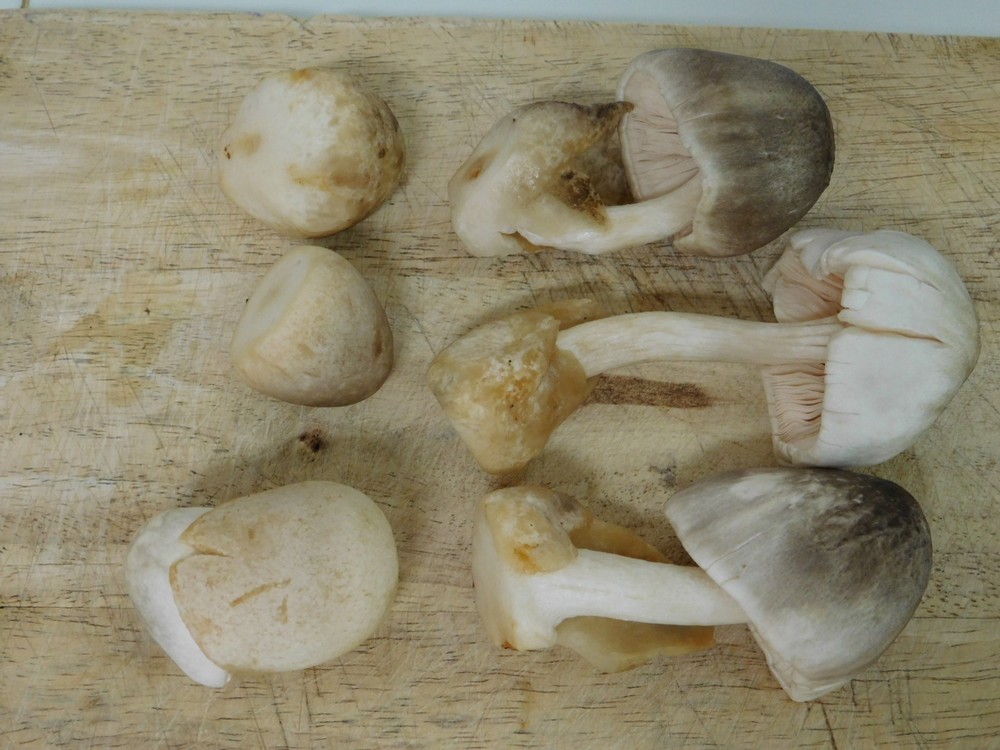
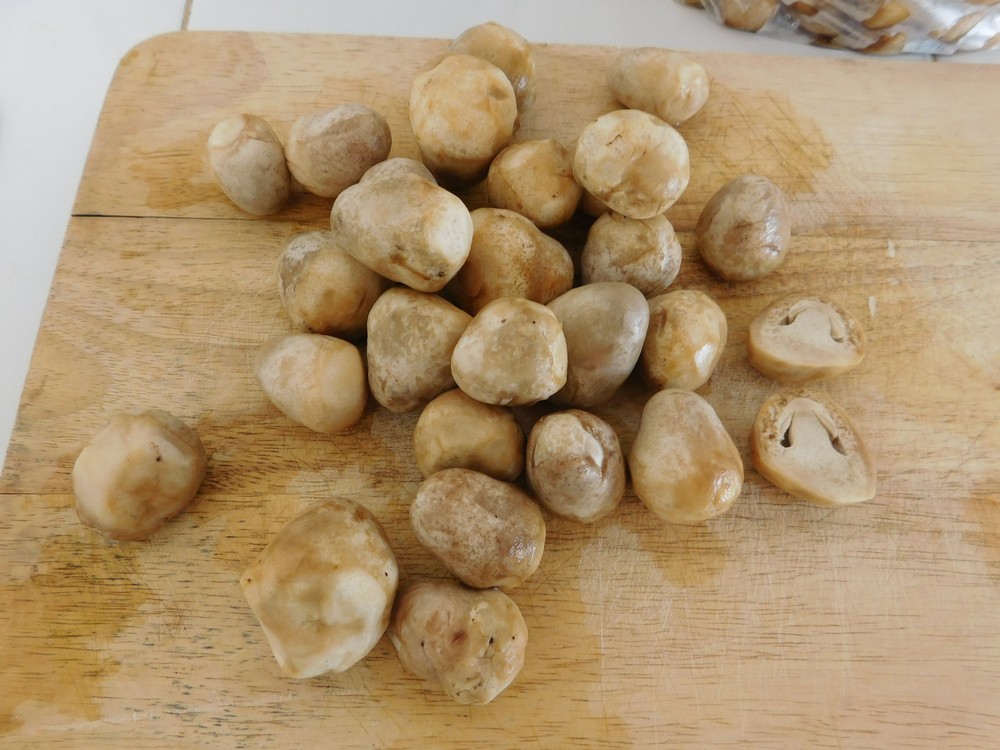
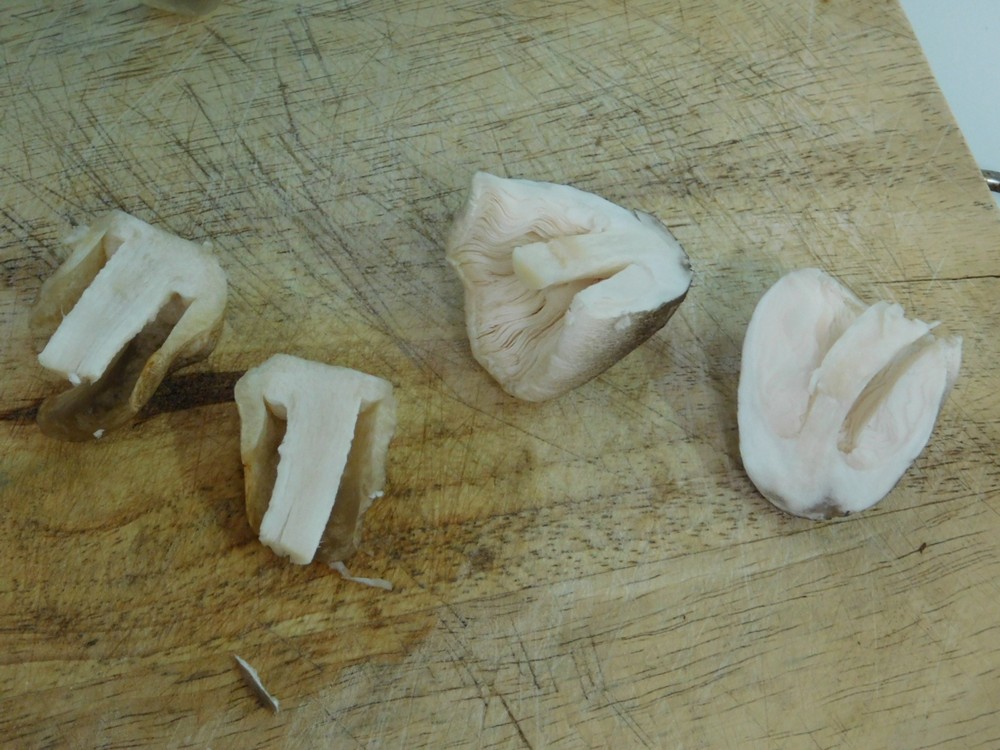
  • The closed type of mushroom looks like a ball as the veil (the outer covering of the mushroom has not opened), leaving the cap and stem inside. To prepare these, simply look for a flat or cut side, then place that on the cutting board and slice only in half from the top to the bottom, the halved pieces are on the right in this photo. If you cut them crosswise, you can see they will just fall apart into different pieces. These are compact and dense mushrooms with excellent flavor. This form of mushroom does not have much water to release when cooking.

Closed Type

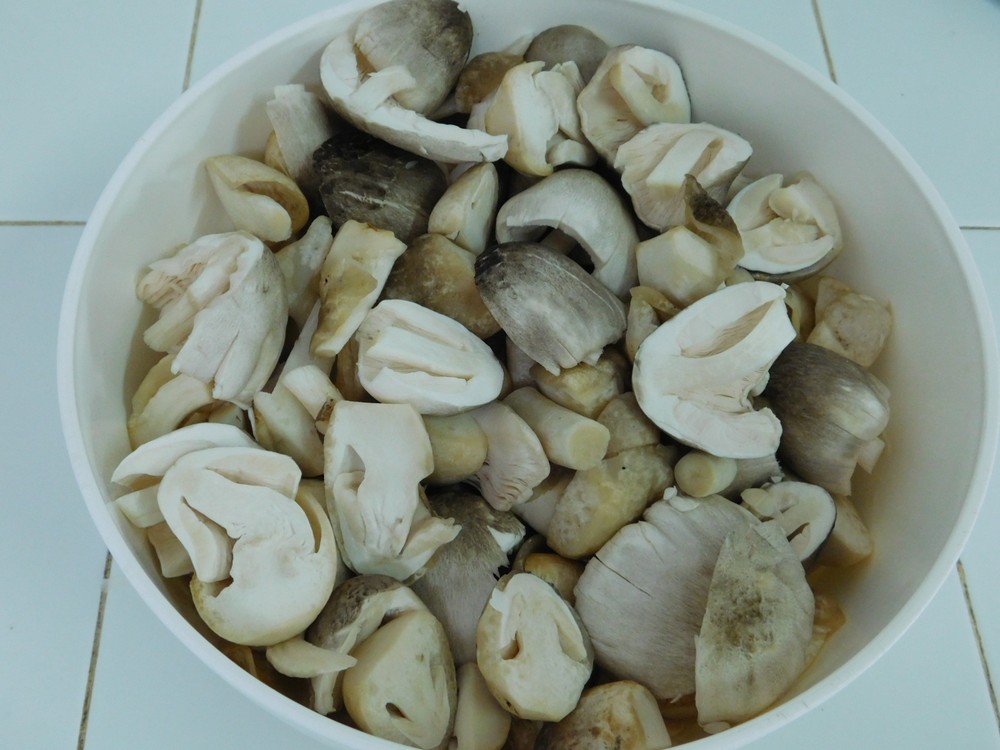
  • The mushrooms on the left are closed (bottom one though has just opened), and on the right is the opened. The opened, the left side (the bottoms of the mushrooms) you can see the ball shape, parts of the veils (the covering over the mushroom in the closed type), the stems, and the caps. When these mushrooms open, it is just a day or two to look like these, so there is a lot of moisture in these as one would expect.
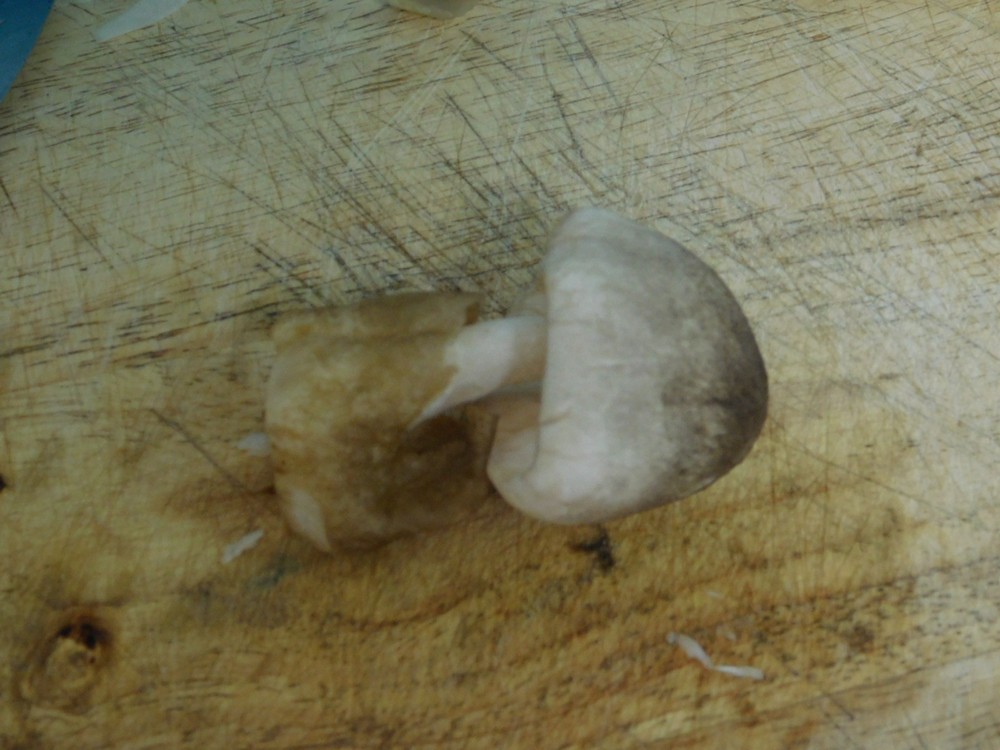
  • To prepare this type, same principle applies, a lengthwise cut. First lay a opened mushroom on your cutting board.
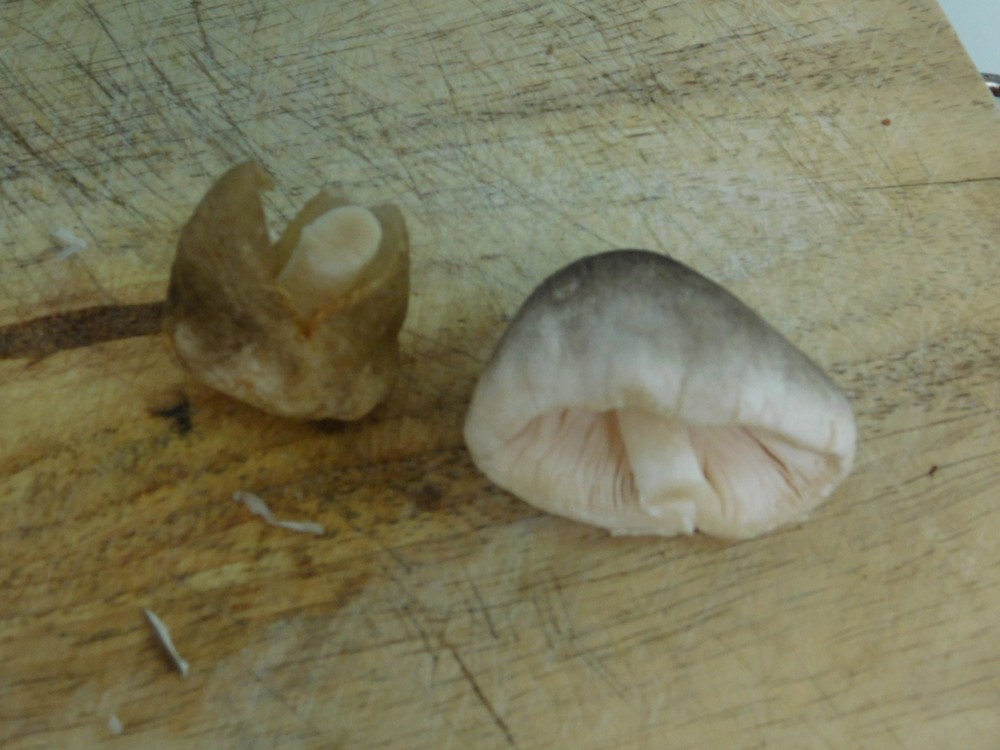
  • Slice the mushroom in half, crosswise through the stem, giving you 2 pieces. If the stem is long, then cut crosswise above the ball (the bottom end) and at the cap, giving you 3 pieces.
  • Now take the ball end and cut through the stem top to bottom, and the cap through the stem, giving you now 4 pieces. If you have a stem section from a mushroom with a long stem, no need to cut the stem, then you have 5 pieces. All the pieces, even the stem, are flavorful and tender.
  • Use the mushrooms in recipes of your choice, keeping in mind, the opened type will give off lots of water as it is cooked.

Notes

I will give a price per kilo when buy these again.
Used in Recipes Listed on this Site:
 
Just helpful knowledge to pass along, Lee Thayer, Thailand.
Teriyaki Straw Mushrooms

Teriyaki Straw Mushrooms

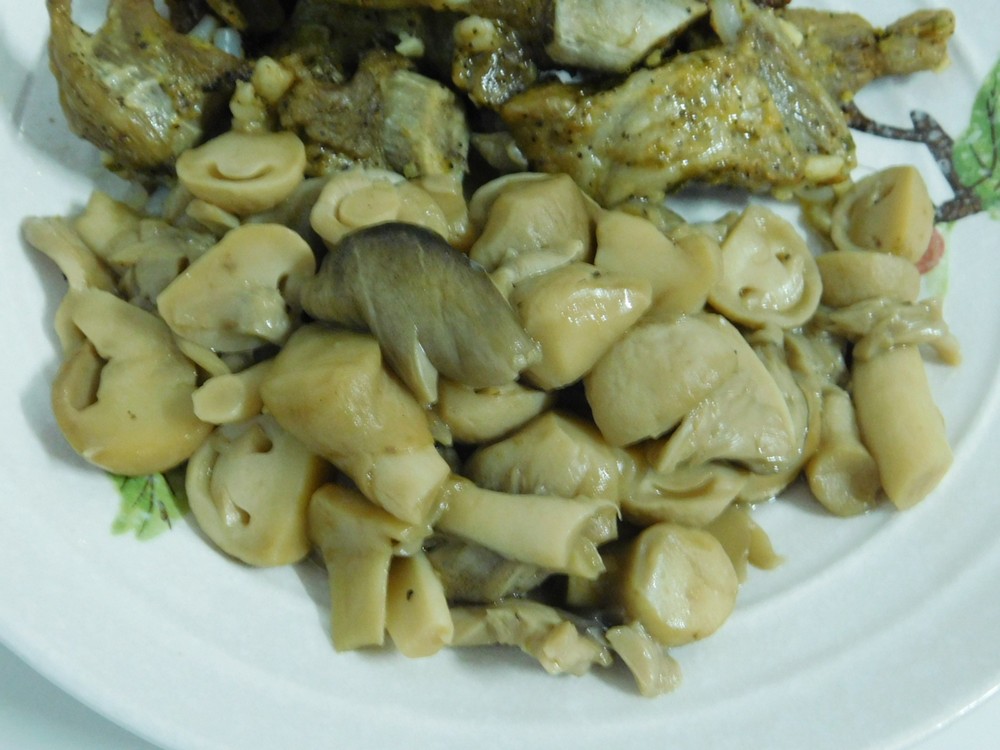
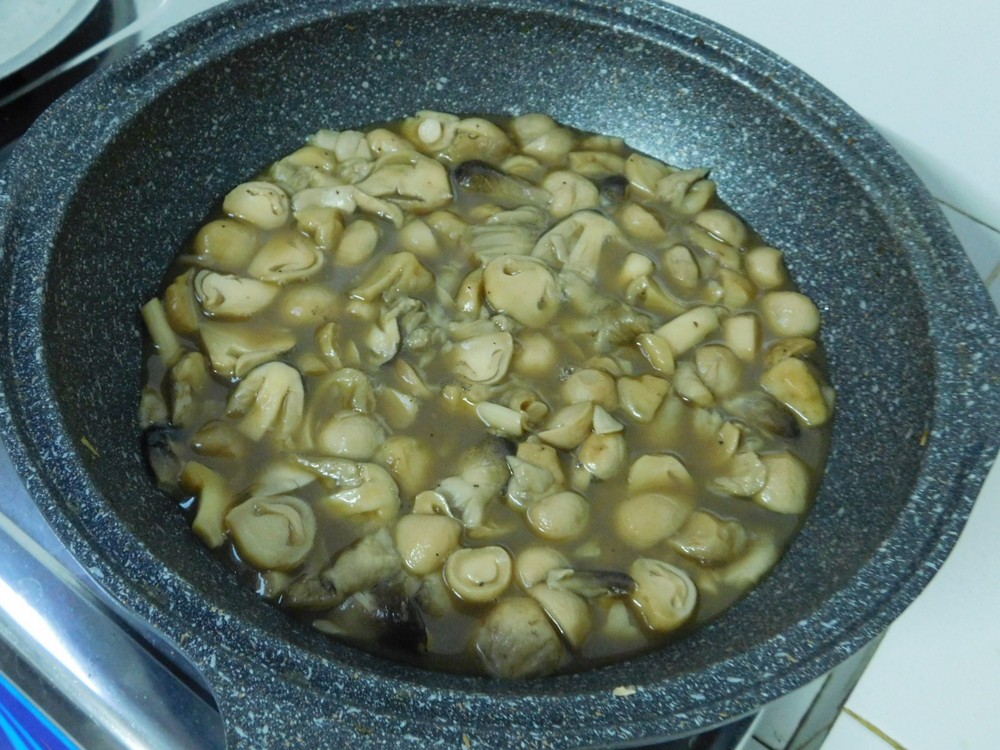
Straw mushrooms, according to Wikipedia, are the 3rd most consumed mushroom in the world. That is believable as they are Asian in origin. This recipe is based on what I received so I used them all as these mushrooms do not last long once they are harvested. Link to the Shortcut is listed in the Recipe Notes section.
Prep Time 15 minutes
Cook Time 20 minutes
Total Time 1 hour 5 minutes
Course Side
Cuisine Asian
Servings 0

Ingredients
  

  • 1.2 kilos Straw mushrooms, this was the weight cleaned, (2 2/3 lbs)
  • 1 cup Teriyaki sauce, (Shortcut)
  • black pepper, as desired

Instructions
 

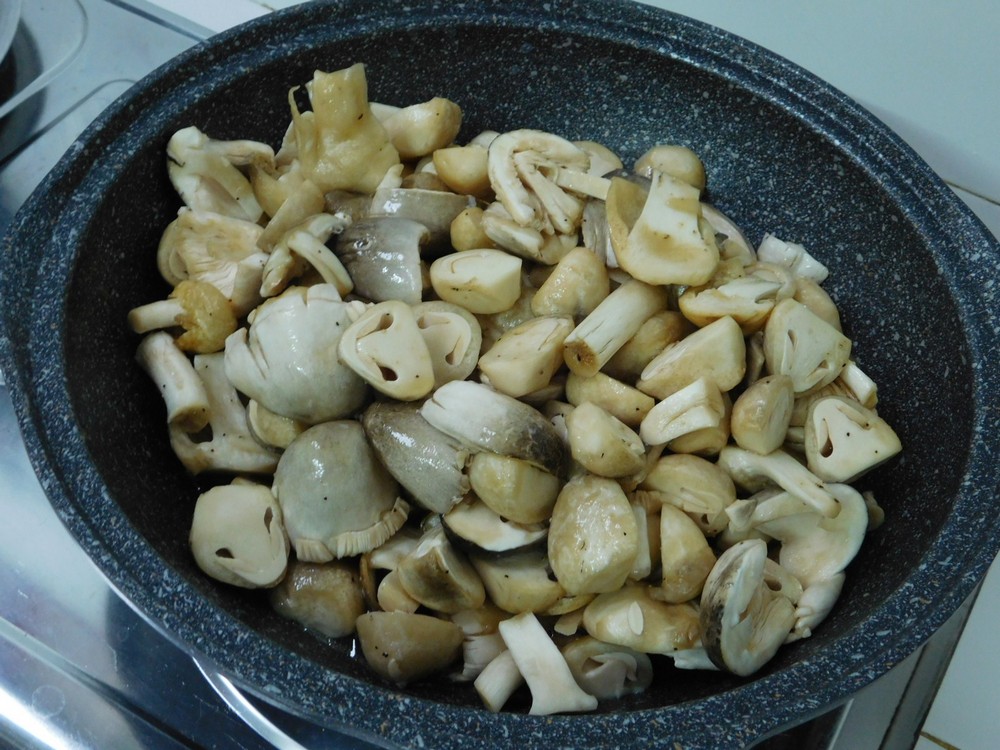
  • Clean any dirt off the mushrooms and give a quick rinse, shake off any water. Slice closed mushroom in half lengthwise, and for open mushrooms, cut in half at the stem, then slice the two piece in half lengthwise through the stem. Place in a large mixing bowl.
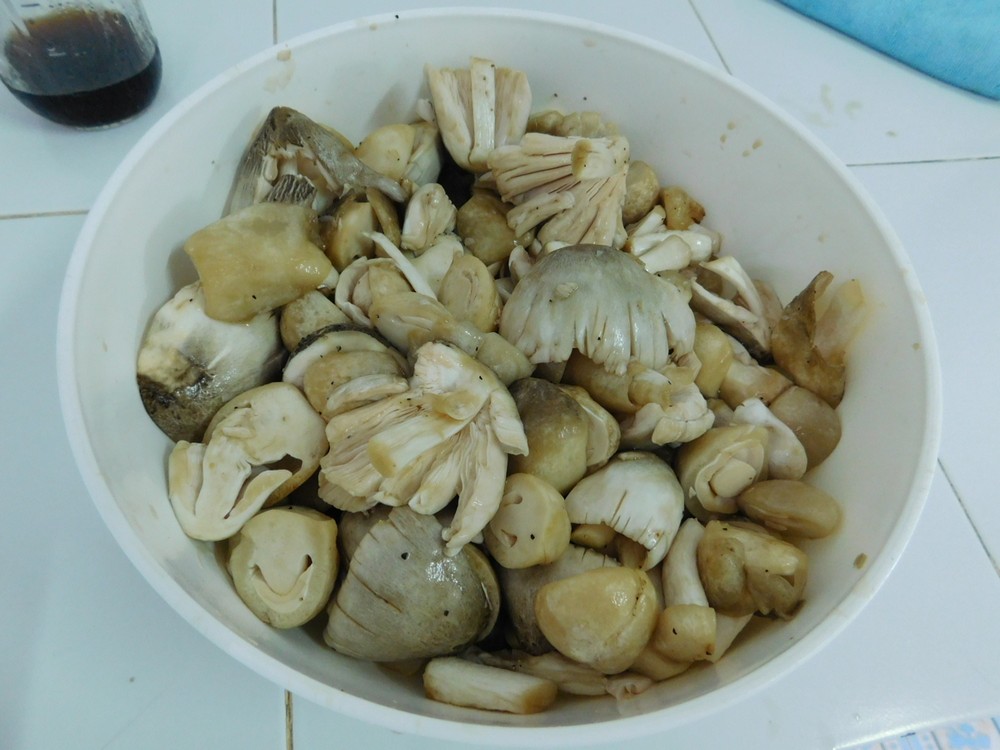
  • Add a good shake or two of black pepper then pour in about 1/2 cup teriyaki sauce (and I cannot stress enough to make your own as well). Give the mushrooms a mix with your hands, then let sit on the counter for 20-30 minutes.
  • Heat a non stick pan, no oil is needed. When the pan is hot, add the mushrooms, just pour the mushrooms and sauce that was not absorbed into the pan.
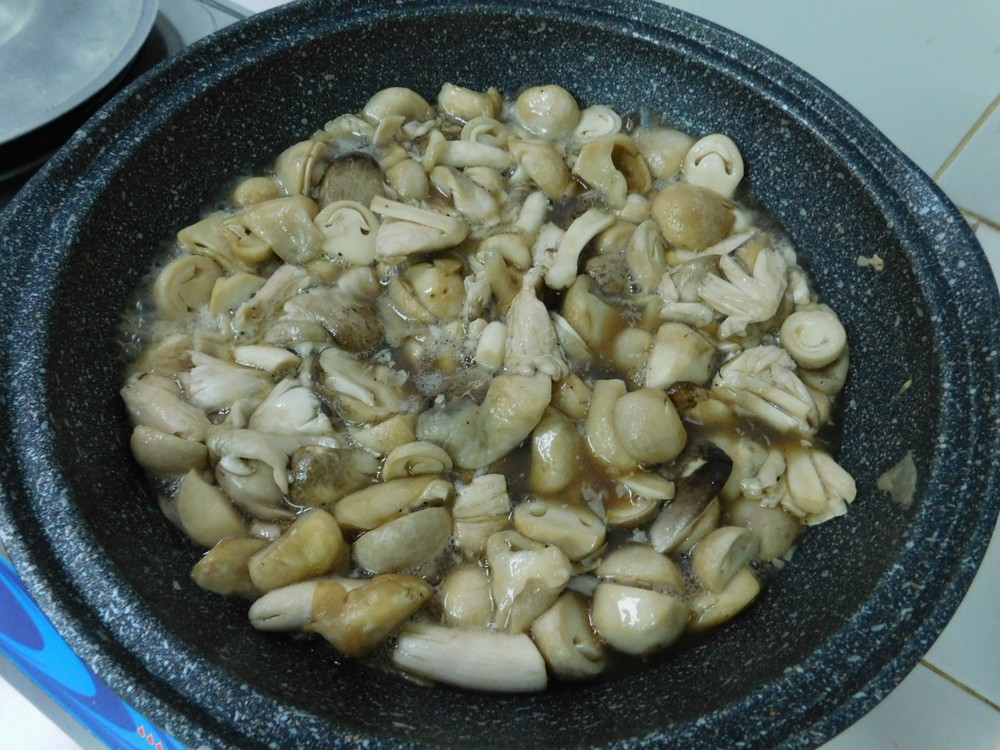
  • Stir fry for a few minutes to get them all heated through and they will release their water and the teriyaki sauce.
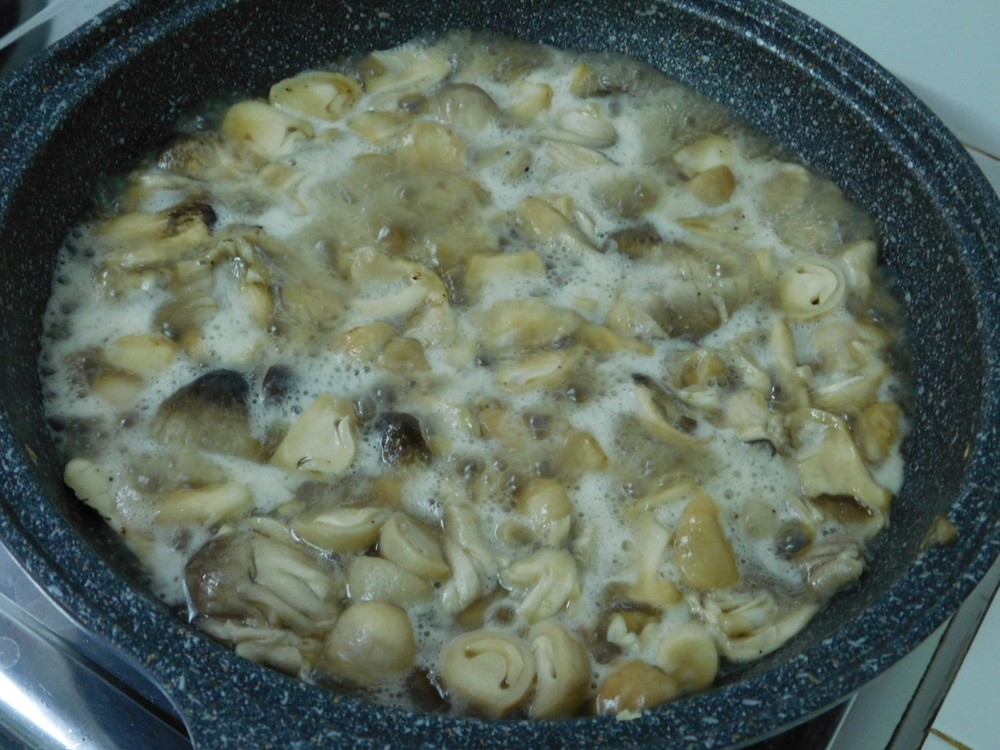
  • Simmer on medium to medium low heat, stir often, the open mushrooms release a lot, and I mean a lot, of water.
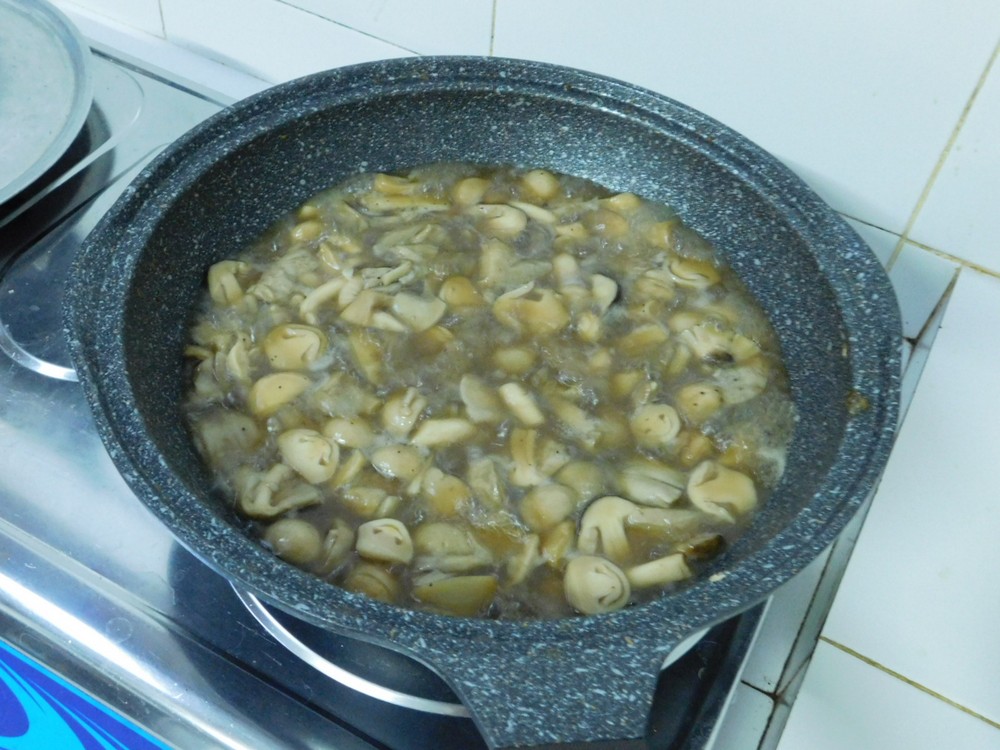
  • When most of the water is cooked off, add the remaining 1/2 cup of teriyaki sauce and stir that in.
  • Continue simmering to reduce the liquid a bit more.
  • Use a slotted spoon and spoon out the mushrooms to a serving dish or add as a side to plate, enjoy.

Notes

I need to get a cost per kilo for straw mushrooms so I can price this, as they are more expensive than the Japanese mushrooms. For now I will say low cost per serving.
Shortcuts: Teriyaki Sauce (照り焼きのたれ), Preparing Straw Mushrooms.
Common method to cook teriyaki mushrooms.
Chinese Pork Ribs (Pressure Cooker)

Chinese Pork Ribs (Pressure Cooker)

This recipe for Phil's Chinese Pork Ribs is inspired by Hip Pressure Cooking, United States.
These are delicious and easy to make. I used my 9 liter (9½ quart) stove top pressure cooker with a pressure of 80 kPa (12 psi) for this, so an electric pressure cooker will be the same. Follow all safety precautions for your model of pressure cooker.
5 from 1 vote
Prep Time 1 hour
Cook Time 15 minutes
Total Time 1 hour 15 minutes
Course Main Dish
Cuisine Chinese
Servings 4 servings

Equipment

  • Pressure Cooker
  • Steamer Tray

Ingredients
  

  • kilos pork ribs, (2½-3 lb)

For the Marinade

  • 2 tablespoons brown sugar
  • 1 tablespoon sesame oil
  • tablespoons light soy sauce
  • teaspoons salt
  • 1 teaspoon black pepper
  • ¼ cup garlic cloves, smashed and minced
  • ½ teaspoon ground ginger, or 1 tablespoon fresh grated
  • 1 tablespoon Sriracha Chili Garlic sauce
  • ½ cup spring onion, sliced, white and green parts

Additional Items

  • 2 teaspoons corn starch
  • 1 cup water
  • spring onion, sliced, for garnish
  • fresh cilantro, chopped, for garnish

Instructions
 

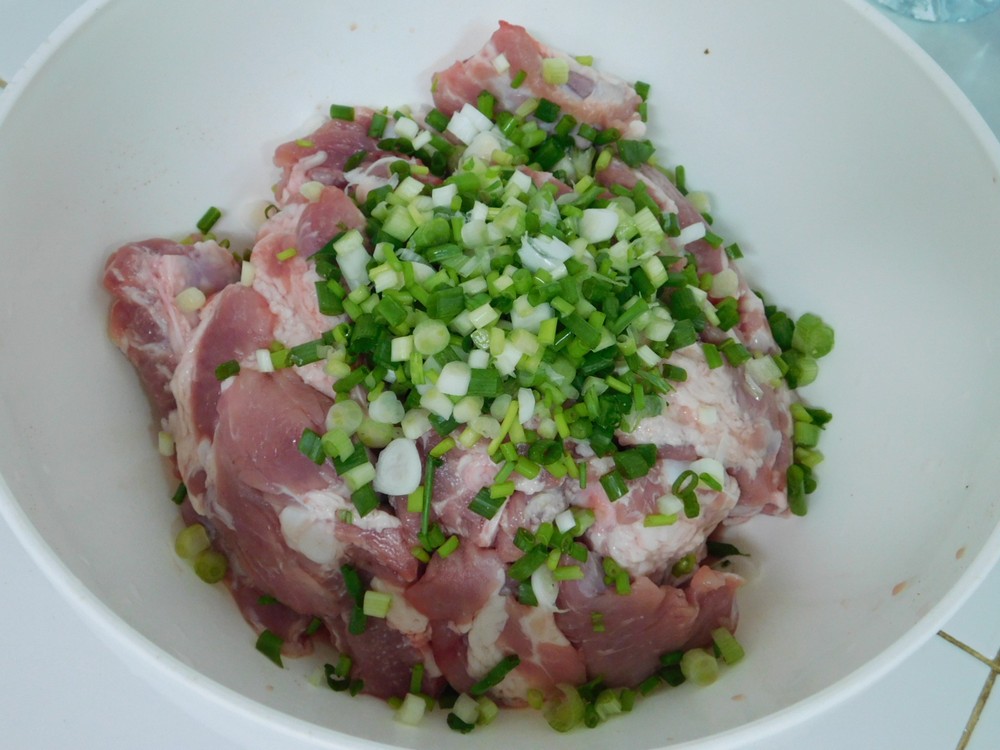
  • Cut the ribs into 1 bone pieces. (I also started to add the spring onion and garlic.)
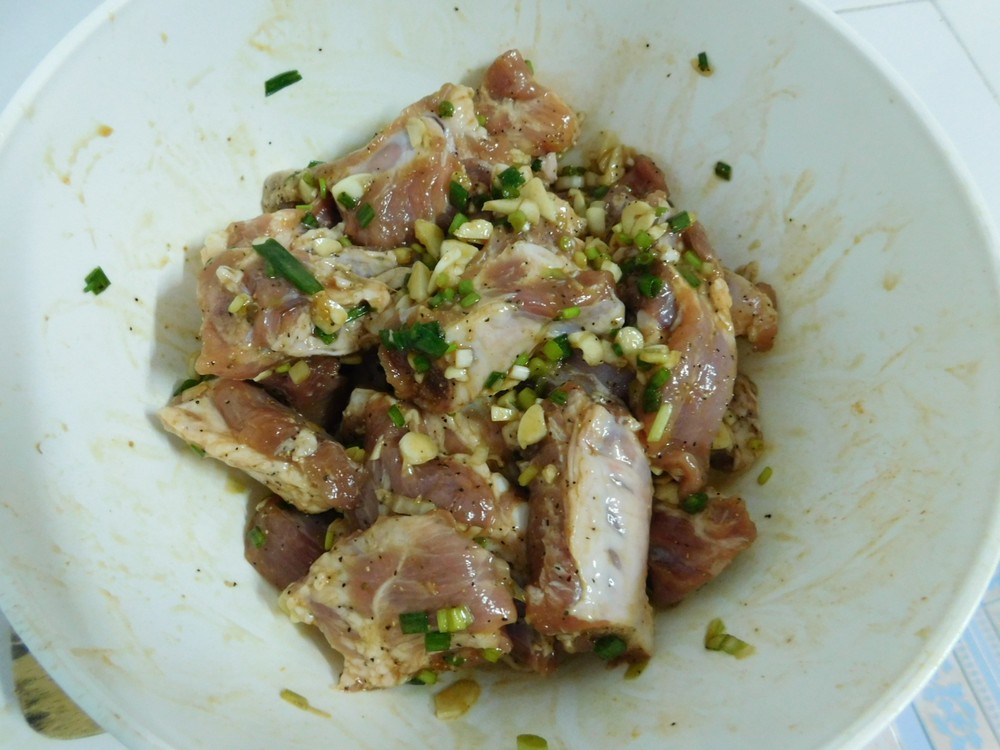
  • In a large mixing bowl, add all the Marinade ingredients and mix together.
  • Add the ribs to the marinade and mix to coat all pieces well. Marinate the ribs at room temp for 30 minutes.
  • After 30 minutes have passed, sprinkle on the corn starch and mix that into the mixture.
  • Add 1 cup of water to your pressure cooker, place the steamer tray or trivet in the cooker, then add the contents of the mixing bowl (ribs and marinade) to the pressure cooker.
  • Add the lid and lock, place the weight (jiggler) on the top, and place on high heat. When the jiggler starts to move and vent pressure (indicating full pressure), reduce heat to low or medium low, just enough heat to maintain full pressure. Set your timer for 15 minutes.
  • When 15 minutes have passed, turn off the heat and move the cooker to an unused burner and allow a natural release of pressure, meaning you have to do nothing.
  • When you have indications of zero pressure in the cooker, about 15-20 minutes after you removed it from the heat, remove the weight then remove the lid.
  • Remove the ribs with tongs to a serving plate, drizzle some of the liquid over the ribs, sprinkle with spring onion and coriander as desired.
  • Serve with rice on the side.

Notes

Low cost.
Pork Ribs (Pressure Cooker)

Pork Ribs (Pressure Cooker)

Spend with Pennies, Holly, Canada.
Tender ribs, short cooking time, win win. For this, I have included a simple rub but by all means, use your preferred rub if you like. For the BBQ sauce, totally optional to use or not use. No serving amount is given, this is a make what you want recipe. I will be using my 9 liter (9½ quart) stove top pressure cooker with 80 kPa (12 psi) pressure for this. Follow all safety precautions for your model of pressure cooker. Link to the Shortcut is listed in the Recipe Notes section.
5 from 1 vote
Prep Time 20 minutes
Cook Time 15 minutes
Total Time 35 minutes
Course Main Dish
Cuisine American
Servings 4 servings

Equipment

  • Pressure Cooker
  • Steamer Tray
  • Oven / Broiler

Ingredients
  

  • 2-3 racks pork ribs, (about 1½ kilo / 3 lb)
  • 1 cup pork broth, or vegetable stock, or just water
  • ½ teaspoon liquid smoke
  • 4-5 cloves garlic, peeled and sliced
  • 1 onion, sliced
  • 6 tablespoons dry rub, listed, or use your own rub
  • BBQ sauce, as needed, Shortcut

Basic Dry Rub

  • 2 tablespoons paprika
  • 1 teaspoon smoked paprika
  • 2 tablespoons brown sugar
  • 2 teaspoons garlic salt
  • 2 teaspoons onion powder
  • 1 teaspoon black pepper
  • 2 teaspoons lemon pepper
  • 2 teaspoons dried oregano

Instructions
 

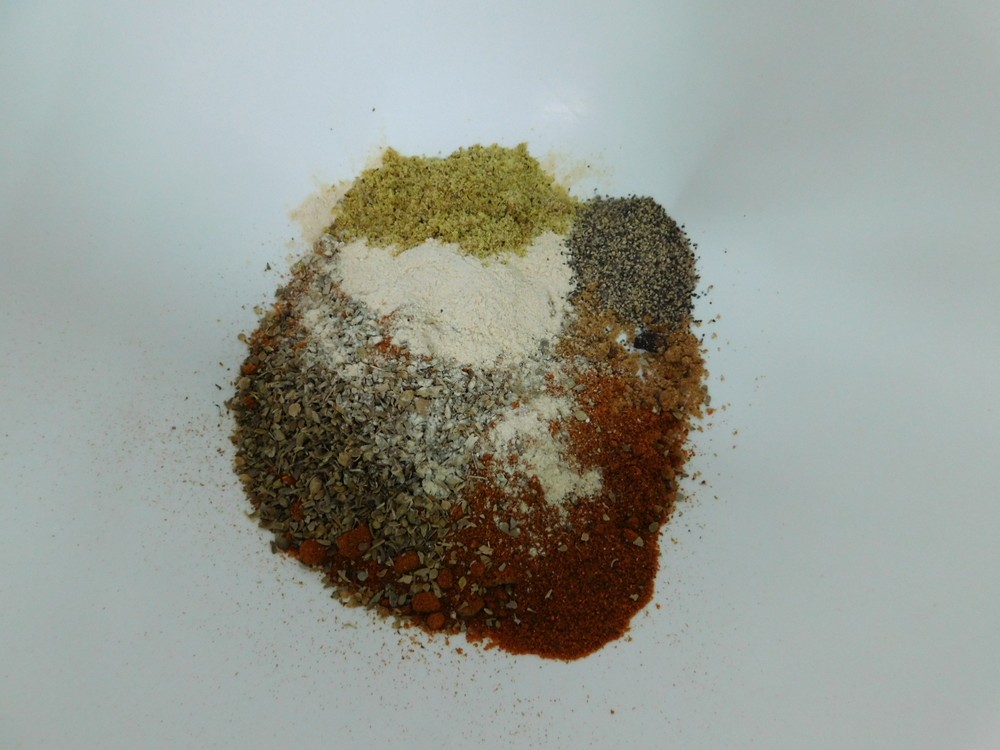
  • Mix together the Basic Dry Rub ingredients in a bowl and set aside.
  • Add the broth and liquid smoke to your pressure cooker add the steamer rack if equipped or place a trivet in the pot. Goal is to keep the ribs above the liquid in the pot.
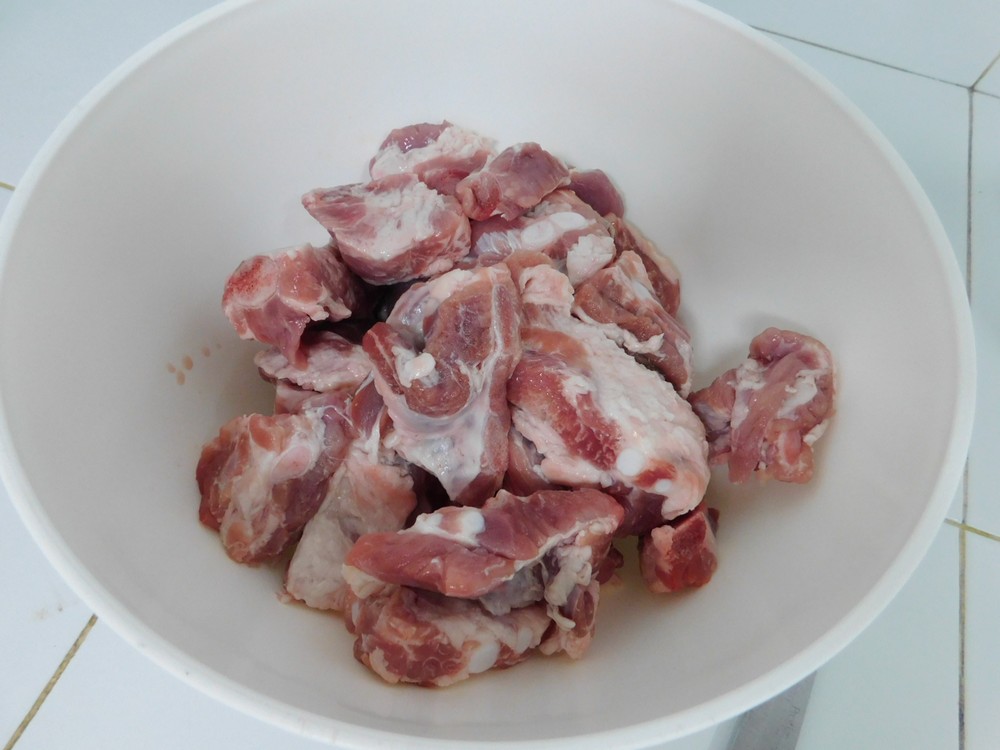
  • Rinse and dry the racks, remove the silver membrane from the back. Cut racks into 1 bone pieces. (Tesco in town was out of the good ribs, just the racks with a lot of white bone was available.)
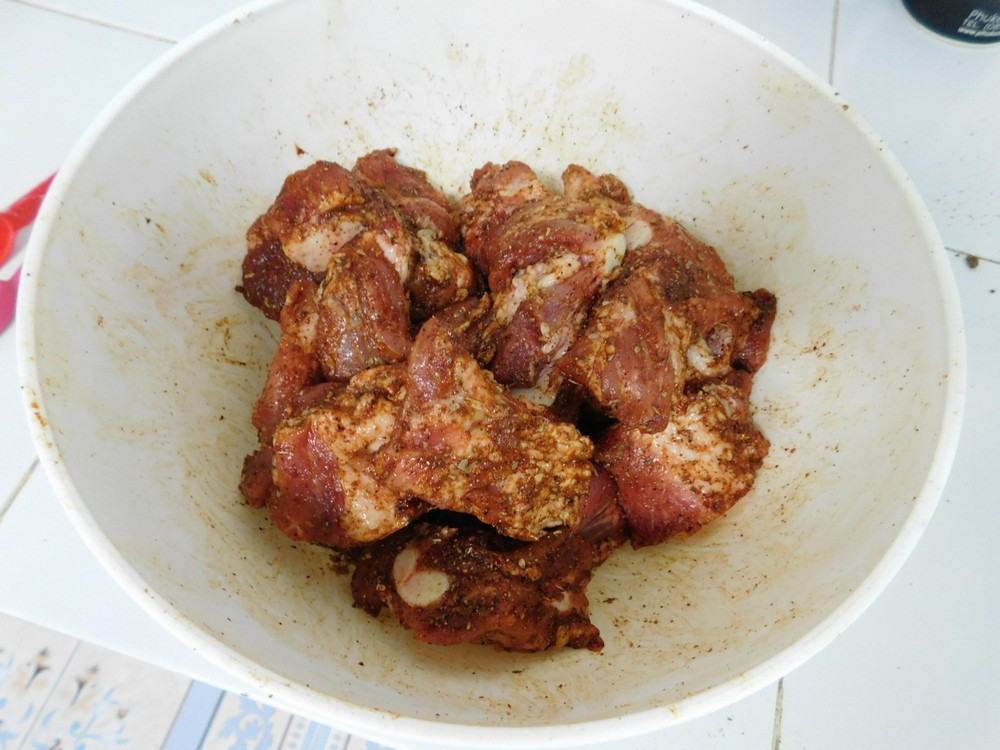
  • Coat the rib sections with the dry rub you made.
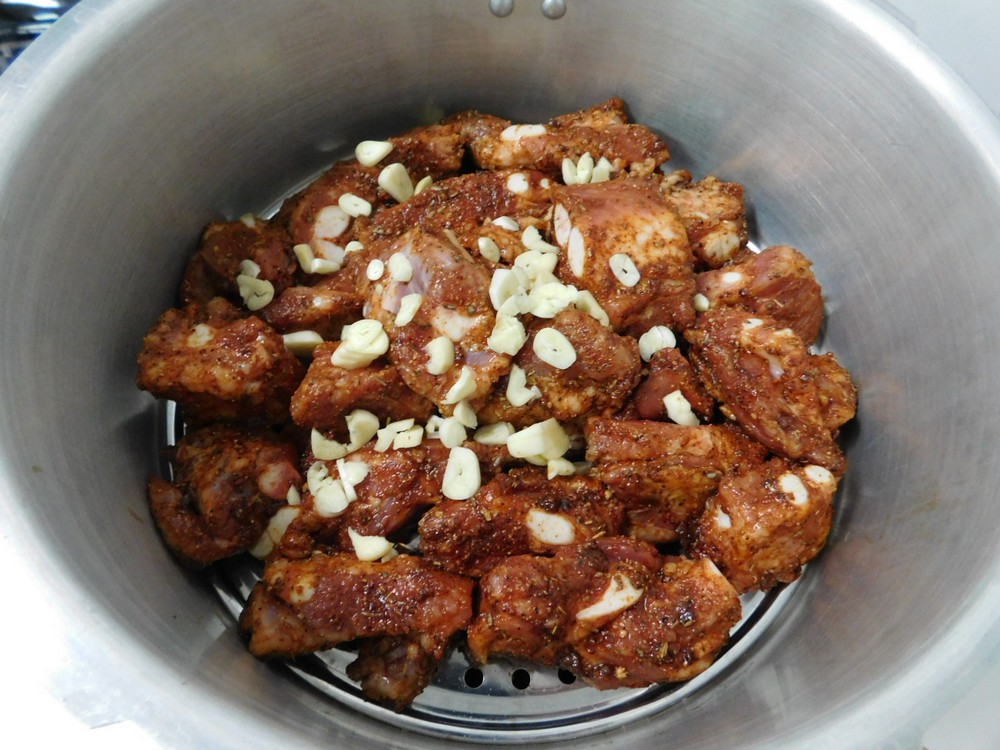
  • Place the piece on the streamer rack and sprinkle with the onion and garlic. (I ran out of onion so just went with garlic.)
  • Place the lid on the cooker and lock, add the weight (jiggler). Place on high heat until the jiggler starts to move and vent pressure. Reduce the heat to low or medium low, but maintain the jiggler moving, indicating full pressure. Set your timer for 15 minutes.
  • When 15 minutes have passed, turn off the heat and move the cooker to an unused burner and allow a natural release of pressure, meaning hands off until you have indication the pressure is at zero inside the cooker, about 15-20 minutes.
  • When indications show zero pressure in the cooker, pull off the weight then remove the lid.
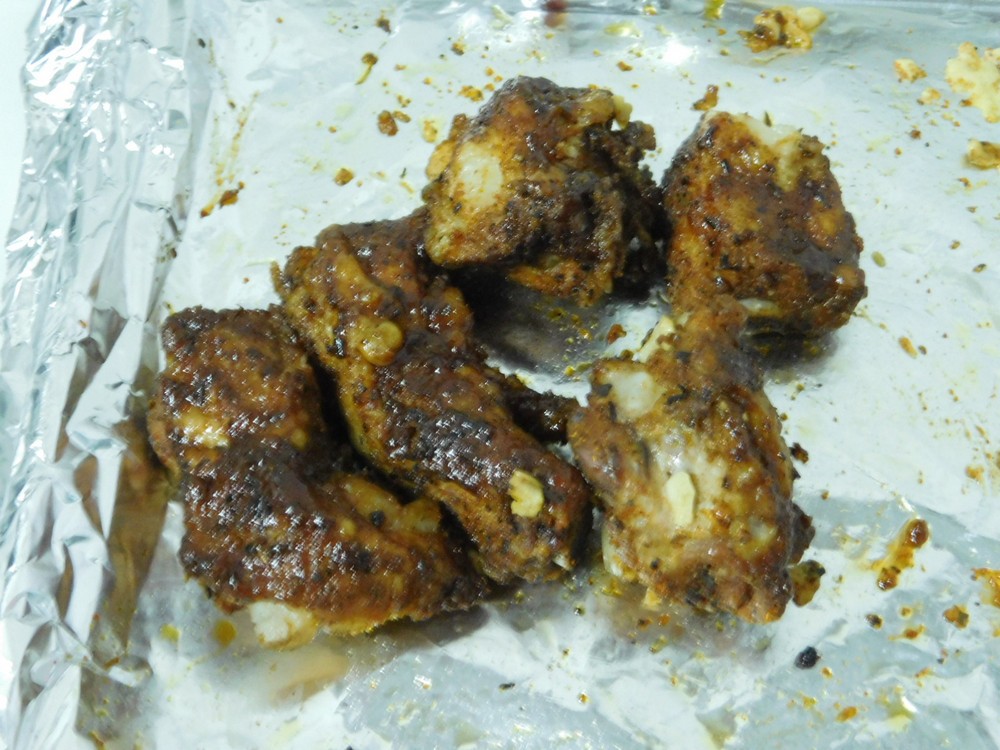
  • Place the ribs on a foil lined baking sheet and brush with BBQ sauce of your choice or simply olive oil, then broil or if using a counter top oven, use the top coil on the highest setting, until the ribs are crisped and slightly charred.
  • Serve and enjoy with sides of your choice.

Notes

Low cost per serving.
Shortcuts: Basic BBQ SauceBrian's BBQ Sauce, Kansas City Style.